
“Man cannot discover new oceans unless you have the courage to lose sight of the shore.”
— Andre Gide
Rumination On The Product Design Process
-
Discover
-
Define
-
Design
-
Deliver
Discover: Exploring the problem space to understand the user.
The discovery stage is about connecting with the user with the intent to understand. Being user-centered remains the integral element of your learning velocity. For example, during the discovery stage, which can be conducted in an interview setting, we gain a better understanding of what the user pain points and needs are. It’s important to stay inquisitive and continue to learn while peaking curiousity.
Discovery is also about understanding the markets current landscape, what trends are happening, analyzing direct and indirect competition, and other valuable data necessary to create the right product that addresses the right problem.
Artifacts & Activites may include:
Exploratory Research
Contextual Interviews
Data Science
What’s on your radar?
Heuristic Reviews
Think Aloud Testing
Exploratory Research
Competitive Analysis
Market Discovery
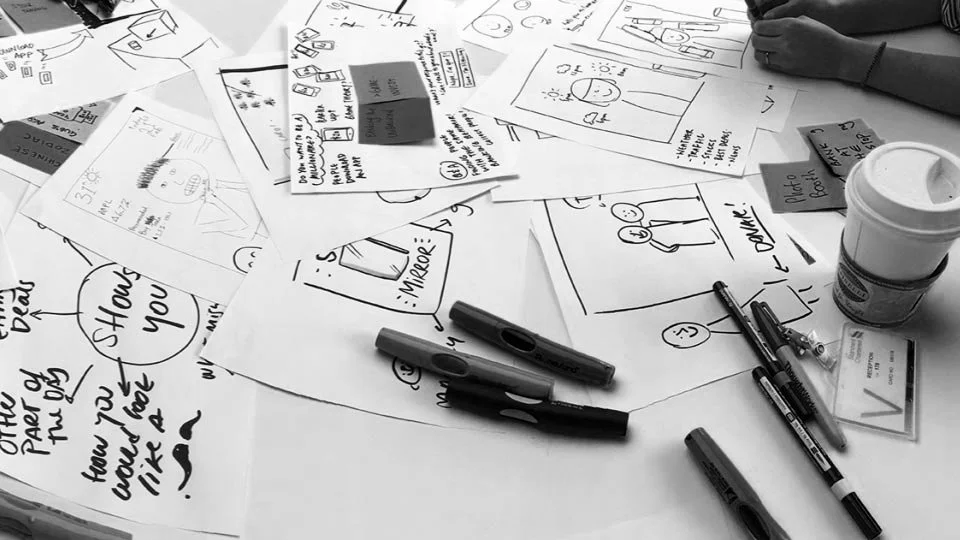
Define: Align on the right problem to solve & prioritize the value.
Alignment is key. This next phase is where the process of finding the right problems and prioritizing them takes place. By now you should have a lot of problems identified, and the key is to align the product direction on the ones which offer the most value to the user by being solved.
There are several methods in the designers toolkit to be able to abstract the insights from the exploratory and discovery phase to expand and narrow these down into product features or product related deliverables. Relying on your data science here is key.
Artifacts & Activites may include:
Affinity Clusters
Bulls Eye Diagram
Journey Mapping
Concept Mapping
Stakeholder Map
Story boarding
How might we statements
Persona Maps
MVP Map & Prioritization
Design: Create the thing the right way - tighten feedback loops.
Design iterations are where all hands are required on deck to build as many potential shippable possibilities as you can. While collaborating across all phases is key - this one is most critical to get well rounded feedback from all stakeholders including engineering to verify the feasibility of what you are looking to do.
This phase ends up being most peoples favorite, and where most Product Designers get their start having strong visual design backgrounds - turning everyone into a designer can be seen as an invaluable skillset during this phase.
Artifacts & Activites may include:
User Testing
Schematic Diagrams
Concept Posters
Lo-fi Mockups
Align Stakeholders
User Surveys
Lo-fi/Hi-Fi Prototyping
Align Features & Prioritize
Design Rankings
Deliver: Build the right solution with continuous deployment.
User Centered Design & Design Thinking helps to create the right problem and design the right thing. Here we rely on our agile principals and engineering expertise to build the right solution, the right way while closing the loop on end to end feedback from the users.
It’s critical to the products success that a “waterfall style” hand off is avoided at this phase. Applying the right level of Agile Development extends the product design process from a delivery of final product to a continuously integrated product mindset and creates opportunities to make incremental improvements on the product and the way the team works together.
Artifacts & Activites may include:
Data analysis
Joining Ceremonies
Real time testing
Design System Integrations
Closing the Loop on Feedback
Iterate & Improve the next MVP
Rose, Bud, Thorn
Support Engineering
Adjust from learnings